Utah football’s defensive tackle reload starts with Karson Kaufusi
Jul 27, 2026, 8:00 AM | Updated: 3:21 pm
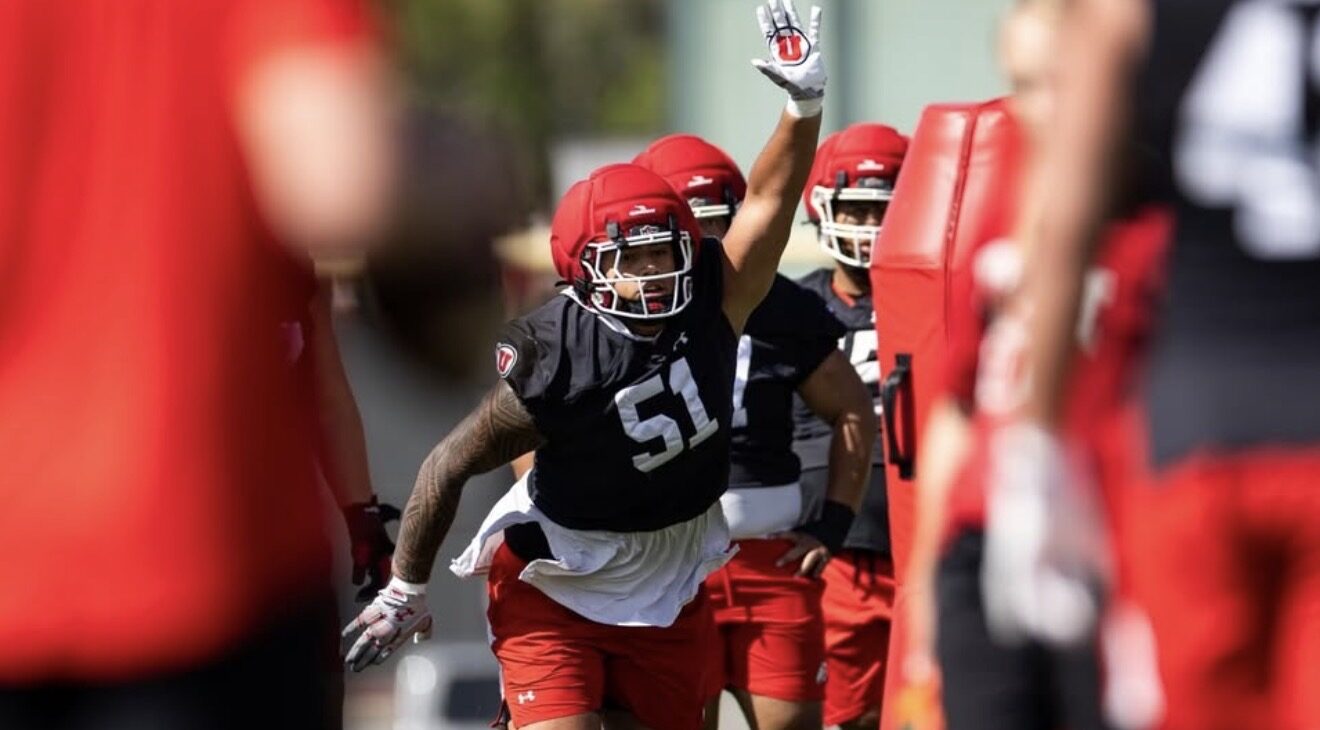
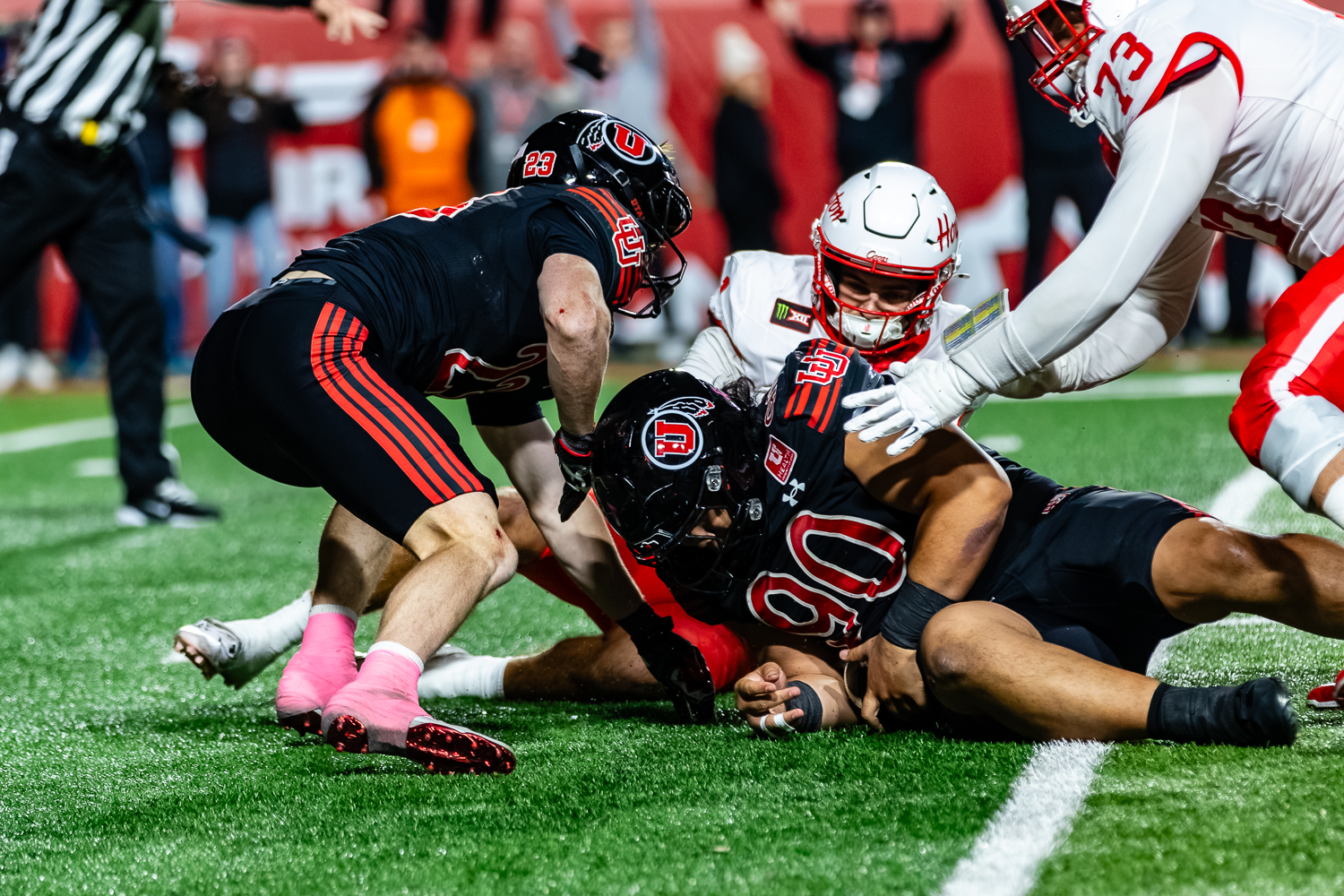
Defensive tackle Karson Kaufusi working through drills. Photo courtesy by Utah Athletics.

SALT LAKE CITY — Utah football is one week away from opening fall camp, where Morgan Scalley and his staff will put the final touches on a roster reload after losing significant production on both sides of the ball.
Perhaps nowhere is that transition more concentrated on the defensive side than at defensive tackle.
The Utes lost their three primary interior rotation players from last season and will replace them with a combination of second-year players and incoming transfers. At the center of that effort is Karson Kaufusi, a sophomore whose importance to Utah’s defensive rebuild is considerably greater than his current statistical résumé.
Kaufusi played 177 defensive snaps and totaled 13 tackles, half a tackle for loss and half a sack across 12 games last season.
Those numbers do not yet describe a foundational player. His expected role entering 2026 suggests Utah believes he can become one.
Karson Kaufusi taking ownership of leadership opportunity
Kaufusi’s physical tools require little imagination. At 6-foot-6, he brings unusual size and length to Utah’s defensive front, and he has grown from 286 pounds as a freshman to 305.
His most encouraging development, however, may be as a leader for an inexperienced position group.
“There are definitely guys—like Karson—that are really bought in, guys that work super hard, that are accountable and everything like that,” Lance Holtzclaw said at Big 12 Media Days. “So I think, in due time, it’ll definitely come to the top and we’ll see who’s going to be the next leaders of the program.”
Kaufusi’s selection to Morgan Scalley’s 15-player leadership council reinforced that belief. He joined established players such as Devon Dampier, Wayshawn Parker, Johnathan Hall and Holtzclaw, signaling how Utah views a sophomore who has yet to become a regular starter.
Hall offered a similarly encouraging assessment.
“Karson leads, and we’ve got a good group of D-tackles. They haven’t had too much experience, but they have it here,” Hall said, pointing to his head. “They’re ready mentally, and all we need to do is go out and produce.”
The production must still come, but Kaufusi has the physical profile, the trust of Utah’s veterans and an opportunity to become the tone-setter for a young position group.
Utah needs his leadership, and more
Utah’s defense remained effective in 2025, allowing 18.9 points per game, collecting 34 sacks and holding opponents to a 34.6% third-down conversion rate. However, the Utes also surrendered 181.2 rushing yards per game and 4.8 yards per carry, according to the program’s season statistics.
Kansas State’s 472-yard rushing performance heavily influenced those averages, but that game exposed the consequences when Utah loses control inside. Linebackers become easier to block, safeties are pulled toward the line of scrimmage and play-action windows grow.
🔟 Utes on the 𝗦𝗵𝗿𝗶𝗻𝗲𝗿𝘀 𝗖𝗵𝗶𝗹𝗱𝗿𝗲𝗻’𝘀 𝗘𝗮𝘀𝘁-𝗪𝗲𝘀𝘁 𝗕𝗼𝘄𝗹 𝟭𝟬𝟬𝟬 𝗪𝗮𝘁𝗰𝗵𝗹𝗶𝘀𝘁‼️#GoUtes | #RSNB | @ShrinersBowl pic.twitter.com/NuQL9zRUJ5
— Utah Football (@Utah_Football) July 22, 2026
The responsibilities of the position do not fall on Kaufusi’s shoulders alone. Pupu Sepulona, Jireh Moe, Lucas Samsula, Jamal Wallace, Mike Tauteoli, and Dilan Battle providing competition and depth. Utah will use multiple defensive tackles rather than asking one player to handle an unreasonable workload.
Utah does not need Kaufusi to become a high-volume producer, but simply need him to lead a dependable, tough, and physical front. Interior line play is often evaluated through work that rarely appears in the box score: holding the point against double teams, preventing guards from reaching linebackers, compressing the quarterback’s space and maintaining gap integrity.
If Kaufusi and the rest of the tackles handle those responsibilities, the rest of the defense benefits.
The Bottom Line
Kaufusi has already taken an important step by emerging as a leader of Utah’s young defensive tackle room. The next step is turning that ownership into dependable production.
Utah does not need Kaufusi to carry the interior alone or produce a dramatic sack total. It needs him to establish a physical standard while Sepulona, Moe, Samsula, Wallace, Tauteoli and Battle form a reliable rotation around him.
If Kaufusi and that group can control the point of attack, Utah’s experienced playmakers will have the freedom to remain aggressive. If they cannot, the uncertainty inside could affect every level of the defense.