No. 15 Utah football at Iowa State: Game preview, score prediction
Sep 25, 2026, 2:33 PM | Updated: 2:36 pm
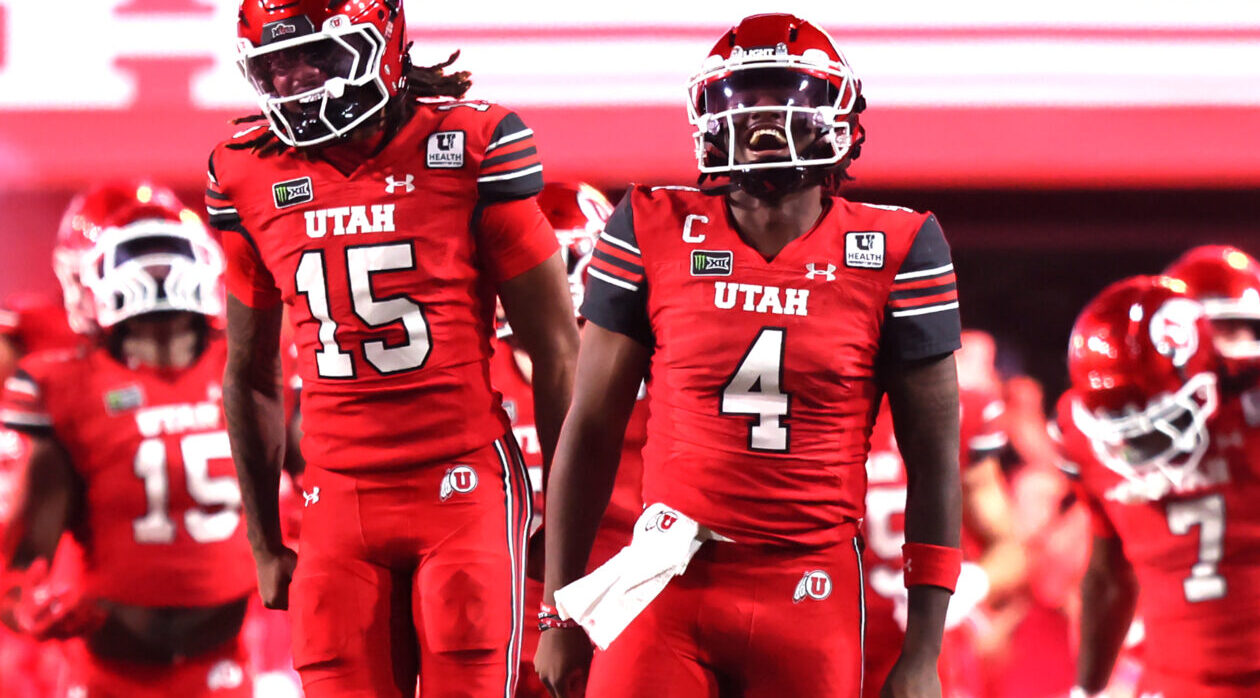
SALT LAKE CITY, UTAH - SEPTEMBER 12: Devon Dampier #4 and Byrd Ficklin #15 of the Utah Utes run onto the field before the start of their game against the Arkansas Razorbacks at Rice-Eccles Stadium on September 12, 2026 in Salt Lake City, Utah. (Photo by Chris Gardner/ Getty Images)
(Photo by Chris Gardner/ Getty Images)

SALT LAKE CITY — Utah has enjoyed a pretty comfortable experience through the first three weeks of the season. All three contests were at home with the crowd behind them, and the game out of reach by halftime in one. Saturday’s matchup against Iowa State will feel different.
No. 15 Utah (3-0, 0-0 Big 12) opens conference play against Jimmy Rogers’ Cyclones (2-1, 0-0) at Jack Trice Stadium in what will be the Utes’ first road game under head coach Morgan Scalley. Kickoff is scheduled for 1:30 p.m. MT on FOX.
This is also Utah’s first visit to Ames since 2010 and the seventh meeting between the programs. Iowa State owns a 5-1 advantage in the series, including a 31-28 win in Salt Lake City in 2024.
The Utes enter the rematch with the more efficient offense, the more disruptive defense and a three-game body of work that has been considerably more convincing. But this matchup has the ingredients to become a bit of a grind. This will be a white-out game and a hostile road environment, and a likelihood of rain and less-than-ideal conditions.
View this post on Instagram
The conditions could look familiar though. Utah played through steady rain during last season’s trip to West Virginia and responded with a 48-14 win, 532 yards of offense and 261 yards on the ground. That does not guarantee another comfortable afternoon.
This is a completely different team and opponent, but Devon Dampier and the Utes have managed these conditions before.
Utah’s first road test is all about the details
The most important part of this game may have little to do with a single personnel or schematic matchup, it’s the environment they’ll be competing in.
How do the Utes handle the noise at Jack Trice Stadium? How clear will the communication be before the snap? How prepared is the team for the elements and a grass field?
“We have to continue to be who we are,” he also shared. “Ultimately it comes down to wearing the right cleats, good footing. We have grass that we practice on and practiced with the wet ball. We’ll do everything we can to prepare for the situation. Ultimately, it’s guys understanding the surface, and we’ll be prepared.”
The little details in a game like this matter considerably more given the conditions add layer of potential risk.
That means catching punts cleanly—or making the right decision to let one bounce—securing shotgun snaps and handoff exchanges, using two hands through traffic and finishing catches before turning upfield. Defensively, it means arriving under control, maintaining leverage and wrapping up when poor footing makes an aggressive missed tackle even more costly.
The operational details matter, too. Utah must communicate through the noise at Jack Trice Stadium, substitute cleanly and avoid the false starts, delay-of-game penalties and unnecessary timeouts that can give a home underdog extra energy.
The run game will set the terms
It seems the run game is going to be critical to both teams in this. Both the Utes and Cyclones are averaging more than 200 rushing yards per game. Both defenses are allowing fewer than 85 yards.
Utah’s run game is averaging 232.7 yards and 5.8 yards per carry. Wayshawn Parker gives the Utes a dependable early-down option, while Dampier, Byrd Ficklin and Daniel Bray provide different forms of explosiveness.
Utah does not need all four to produce a highlight. It needs the group to keep the offense in manageable situations.
The same equation applies when Iowa State has the ball. The Cyclones are averaging 203.7 rushing yards, and Aiden Flora has 328 yards with eight runs of at least 10 yards, most of which came last week against Bowling Green.
Radar image provided by Hudl IQ.
Utah is allowing only 75 rushing yards per game. This is going to be the toughest test yet, as Jaylen Raynor is dual-threat and the unafraid to utilize his legs early and often.
That puts pressure on the defensive line to play with physicality, and keep the linebackers free to diagnose the action because they’ve played quite well through three games.
According to Hudl IQ, Johnathan Hall’s 8.9% impact play rate ranks 48th among 245 linebackers with at least 100 plays, while Trey Reynolds’ 11.4% true-tackle rate ranks 54th. To complement those two, Cyrus Polu’s 4.9% pressure rate ranks 20th, and his 3.3% charted sack rate is 4th, and Elijah Elliss currently has the highest havoc rate of the group at 9.2% which ranks 23rd among that same 245 linebackers.
All four continuing to make the impact they have up to this point, will be key to tomorrow’s defensive success.
- Hotline Big 12 power rankings for Week 4: BYU and Utah on top as Texas Tech grabs pole position
- How to watch No. 15 Utes at Iowa State: TV channel, kickoff time, streaming
- Morgan Scalley press conference takeaways: Teams versatility, growth and aggressiveness stand out
- For another week, BYU and Utah move up in latest AP Top 25 rankings after 3-0 start
- Patrick Kinahan: Weak competition aside, Utes rolling as conference play starts
- Instant takeaways: Braden Pegan shines, defense dominates in 33-0 shutout win
- Braden Pegan hauls in 2 TDs against former team as No. 17 Utes shut out Utah State
Make Iowa State drive the field
Aiden Flora is Iowa State’s most dangerous offensive player and a threat beyond the backfield. He returned a punt 66 yards for a touchdown against Bowling Green, while Cameron Pettaway added a 100-yard kickoff return. Those are the shortcuts Utah cannot allow in a game where sustained offense may be difficult.
The Cyclones’ passing game has been more explosive than consistent. Jaylen Raynor is 29-of-52 for 434 yards, with four touchdowns and one interception. He’s also ran 21 times for 110 yards and two scores. The 55.8% completion rate is leading to some inefficient moments offensively, and could be key tomorrow.
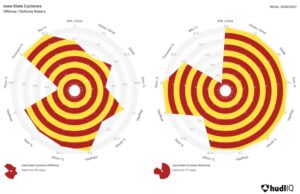
Radar image provided by Hudl IQ.
His go to targets have been Omari Hayes and Dominic Overby, who have combined for 201 yards on 10 receptions, while tight end Vince Benetti has caught two touchdown passes. The group can strike downfield, but it has not established a dependable possession game.
Utah must maintain it’s tackle efficiency in this one, as Flora can rip off explosives. The defense must keep Hayes and Overby from getting behind the secondary and force Raynor to repeatedly complete passes in tight windows. The Utes’ five leading pass rushers have combined for 34 pressures, giving them opportunities to disrupt Raynor without sacrificing coverage.
If Iowa State has to travel 75 yards at a time, its inconsistency should surface. Short fields, return opportunities and missed tackles are what make the Cyclones dangerous.
The Bottom Line
Utah comes into this game with the more dynamic offense and disruptive defense. However, Iowa State has played with an impressive standard to begin Rogers’ tenure.
Jack Trice Stadium will provide the first real road test of the Scalley era, and the elements could make ball security, communication, field position and rushing efficiency more important than raw explosiveness.
The Cyclones defense is sound and tough, which will require a higher level of offensive performance from the Utes. The offense has some dangerous elements to it that the Utah defense must be prepared for.
The Utes have more ways to win. Its defense is equipped to control the run, its own rushing attack can keep the offense on schedule, and Dampier has shown the efficiency and composure to take what a defense gives him.
This may not always be pretty. Utah handles the environment, wins the turnover battle and creates separation.