2027 NFL Draft: Way-too-early look at Utah football players who could emerge this fall
Apr 28, 2026, 11:26 AM | Updated: Apr 29, 2026, 11:13 am

PASADENA, CALIFORNIA - AUGUST 30: Wayshawn Parker #1 of the Utah Utes reacts after a rushing touchdown during the first half of a game against the UCLA Bruins at Rose Bowl Stadium on August 30, 2025 in Pasadena, California. (Photo by Sean M. Haffey/Getty Images)
(Photo by Sean M. Haffey/Getty Images)

SALT LAKE CITY — With the NFL Draft in the rearview mirror, the conversation for the 2027 class of prospects has already begun. For Utah football that topic is going to feel a little different this offseason.
There’s no pair of plug-and-play first-round tackles headlining the offseason. No obvious Day 1 locks dominating early mock drafts the way Spencer Fano and Caleb Lomu did a year ago.
Instead, Utah’s path to success in the 2027 NFL Draft will be built the way it usually is — not on preseason hype, but on players emerging in real time during the 2026 season.
This isn’t a class defined by what it already is. It’s a class that will be defined by who takes the jump — who turns flashes into production, traits into consistency, and opportunity into draft stock.
Here’s a way-too-early look at some of Utah’s most likely candidates to emerge as 2027 prospects.
Wayshawn Parker
Why he has a case: Parker isn’t projection — he’s production. As a second year player, Parker amassed nearly 1,000 rushing yards on 7.0 yards per carry against a Power conference competition. That level of efficiency, paired with his 5-foot-10, 205-pound frame, fits exactly what the NFL is trending toward at running back: efficient, explosive, compact, and versatile.
He’s already shown:
- Big-play ability (multiple 100-yard games)
- Receiving value out of the backfield
- Real contact balance late in runs
The question he’ll need to answer: NFL teams will want to see how much of Parker’s production was him vs the offensive line. Parker was a big play threat every time he touched the ball because he was often provided the runway to create them. He’ll need to follow up last season’s performance with another efficient and explosive campaign for Utah.
Braden Pegan
Why he has a case: Pegan fits the mold of a modern, quarterback-friendly receiver. He’s a capable threat at all three levels of the passing attack. His value shows up in structure — working the intermediate areas, finding space, and consistently being where he’s supposed to be. In an offense built on timing and rhythm, that translates. At 6-foot-3, 210 pounds, Pegan has the physical and athletic profile that tends to bode well for receivers.
He’s already shown:
- Reliability in short-to-intermediate routes
- Feel for spacing against zone coverage
- Consistent involvement in the passing game
The question he’ll need to answer: Can he win on his own? Pegan needs to prove he can separate against higher-level athletes and create explosive plays. Without vertical or after-the-catch production against improved competition this season, and his profile will cap quickly. With it, he becomes a much more complete and attractive receiver in next year’s draft.
Larry Simmons
Why he has a case: Simmons’ playmaking flashes are real — body control, catch radius, and the ability to make difficult plays in traffic. Those are NFL tools that can’t be taught. He had quite a few of those highlight-reel worthy plays this season. The ability to win and secure big plays at the moment of truth is a big quality to have for a receiver. The improvements he made physically this spring were also very encouraging.
He’s already shown:
- Strong contested-catch ability
- Natural body control adjusting to the ball
- Flashes of big-play potential
The question he’ll need to answer: Can he do it consistently with more opportunity? Right now, Simmons is a highlight player, not a volume one. He needs to become a down-to-down option — cleaner routes, more targets, and sustained production — to turn traits into draft value.
Devon Dampier
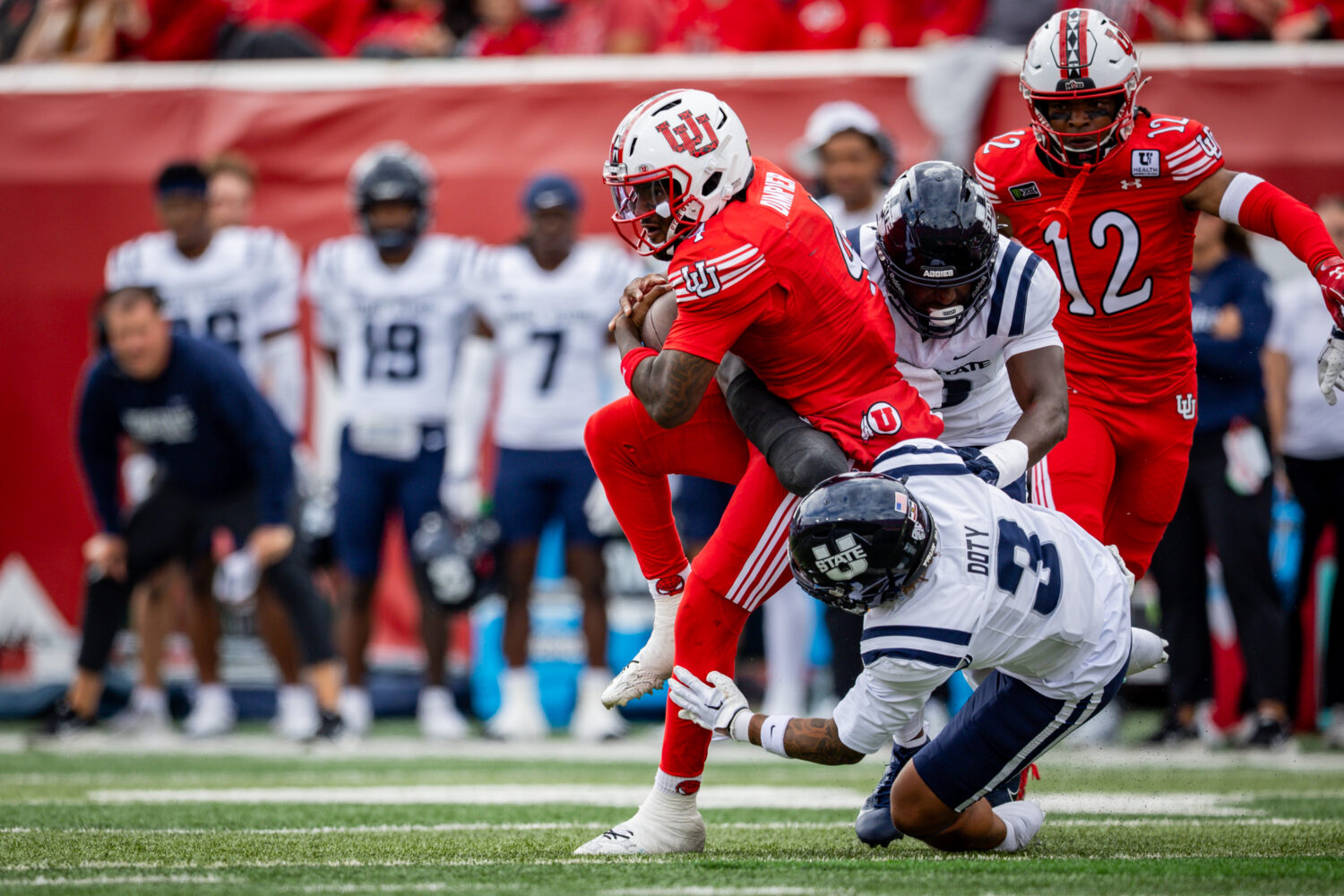
Why he has a case: Production and playmaking always give quarterbacks a path — and Dampier has both. With over 2,000 passing yards and 500+ rushing yards in-season splits, he’s already shown he can create offense in multiple ways. He didn’t just transition to a high level of competition, he cleaned up and improved his quality of play while doing so.
He’s already shown:
- Dual-threat ability with real rushing production
- Play extension outside of structure
- Big-play upside as both a passer and runner
The question he’ll need to answer: Acknowledging the physical trait thresholds that Dampier has no control over, production and starts at the quarterback position matter more now then ever. Dampier will have that but with that he needs to show that he can mentally control the game. Dampier needs to show growth in pre-snap recognition, progression-based passing, and limiting volatility. NFL teams will evaluate whether he can operate from the pocket consistently — not just create when things break down.
Lance Holtzclaw
Why he has a case: With edge being the premium position that it is, one-year flashes can go a long way. Former Utah edge Jonah Elliss is a prime example of what one breakout season can do. NFL teams are constantly looking for pass rush help. Holtzclaw profiles as Utah’s best pass rusher within the group, given his athletic and physical qualities. Holtzclaw was a rotational player this season but has emerged as a leader on the squad this offseason.
He’s already shown:
- Blend of athleticism and physicality
- Ability to impact games in rotation
- Functional production in limited opportunities
The question he’ll need to answer: Does he have the breakout potential that Elliss or John Henry Daley had? Holtzclaw needs to turn rotational impact into full-season consistency and impact. More tackles for loss, more disruption, and more presence snap-to-snap will define his ceiling.
Johnathan Hall
Why he has a case: Hall fits the Utah linebacker mold that keeps getting drafted — instinctive, and physical. His game is built on reading and triggering quickly. There is also a lot of effectiveness in coverage given his experience at safety. Hall has the athletic qualities needed for modern day linebacking.
He’s already shown:
- Fluid movement skills in space
- Range to cover sideline-to-sideline
- Ability to match up in coverage against backs and tight ends
The question he’ll need to answer: Becoming a more complete playmaker. Hall has coverage ability, range, and comfort in space, now it’s about making plays on the ball consistently, while proving himself more reliable patrolling the middle of the field. This will be his third year at the position, which is typically when the game starts to all come together for players.