NCAA President: Unlikely All Schools Will Start Seasons At Same Time
May 9, 2020, 2:11 PM

President of the National Collegiate Athletic Association Mark Emmert speaks to the media ahead of the Men's Final Four at U.S. Bank Stadium on April 04, 2019 in Minneapolis, Minnesota. (Photo by Maxx Wolfson/Getty Images)
(Photo by Maxx Wolfson/Getty Images)

SALT LAKE CITY, Utah – NCAA President Mark Emmert says the coronavirus is making it unlikely all schools will be ready to begin competing in college sports at the same time.
The goal, he said Friday night, is for every team to have an equal amount of preparation time before its season starts, and there could be some competitive inequities caused by schools having varied timelines for re-opening campuses.
Emmert appeared with Dr. Brian Hainline, the NCAA’s chief medical officer, in an interview shown on the NCAA’s official Twitter account Friday night.
𝐍𝐂𝐀𝐀 𝐒𝐨𝐜𝐢𝐚𝐥 𝐒𝐞𝐫𝐢𝐞𝐬 | 𝐄𝐩 𝟕
𝘛𝘩𝘦 𝘍𝘶𝘵𝘶𝘳𝘦 𝘰𝘧 𝘊𝘰𝘭𝘭𝘦𝘨𝘦 𝘚𝘱𝘰𝘳𝘵𝘴NCAA President Mark Emmert & NCAA Chief Medical Officer Dr. Brian Hainline discuss the impact of COVID-19 on the future of college sports with @TheAndyKatz. https://t.co/tX8JYtbapq
— NCAA (@NCAA) May 8, 2020
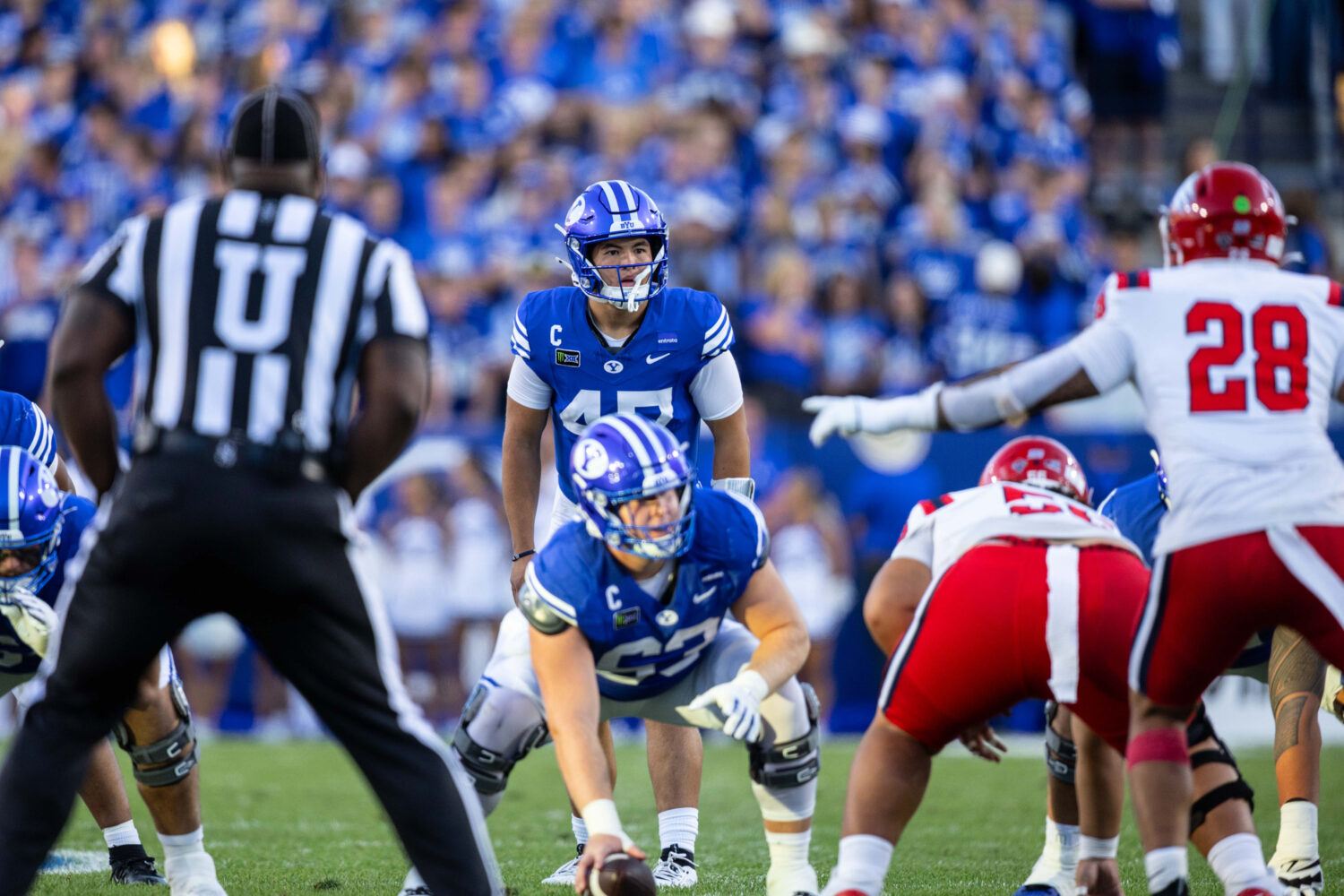
Major football conference commissioners have stated their goal is for all 130 teams in 10 conferences across 41 states to begin the season at the same time. As states impacted differently by the COVID-19 pandemic re-open on different schedules, the possibility rises that the season will lack a uniform start date and number of games.
“I think we should assume that’s going to be the case,” Emmert said.
For football, the working plan is six weeks of conditioning and practice before playing games, though that’s not “set in stone,” Hainline said.
“All the various (NCAA) member committees and the conferences are all talking about: What does it mean if we have that sort of scenario where we’ve got different opening times or different opening models,” Emmert said.
“What does it mean if you look at a conference, for example, if a conference has some schools open and some not?” he added. “You can’t run a regular schedule if you’ve got that scenario. How do you adjust all the rules to provide as much flexibility as you possibly can to let student-athletes have a good experience in that season?”
FBS schools are required by NCAA rules to play at least nine games, including five at home.
RELATED STORIES


The FBS season is scheduled to begin around Labor Day weekend, with a handful of teams starting the Aug. 29, the Saturday before Labor Day.
Most teams are scheduled to play 12 regular-season games through Thanksgiving weekend. The first weekend of December each FBS conference plays a league championship game.
“We aren’t going to have one national time when everyone can start preseason so there’s going to be a little bit of inequity there,” Hainline said. “The most important thing is what’s going to be the minimum amount of time necessary that you have to be in preseason, for example, before you can start football.”
Emmert said member schools and conferences are working toward moving forward together.
“I think it’s unlikely everybody is going to be in the same place at the same time and that will create some of those difficulties,” he said.
Emmert also reiterated a common refrain from college sports leaders in recent weeks: There can be no college sports on campuses that are not open to students.
Big 12 Commissioner Bob Bowlsby told the online sports network Stadium earlier this week there could be room for athletes to compete in a situation where a school is only offering online classes.
Emmert seemed to draw a more distinct line.
“If you don’t have students on campus, you don’t have student-athletes on campus,” he said. “That doesn’t mean it has to be up and running in the full normal model, but you’ve got to treat the health and well-being of the athletes at least as much as the regular students. So if a school doesn’t reopen, then they’re not going to be playing sports. It’s really that simple.”