Utah names six captains, 15-player leadership council for 2026 season
Aug 25, 2026, 4:26 PM | Updated: Aug 26, 2026, 11:16 am
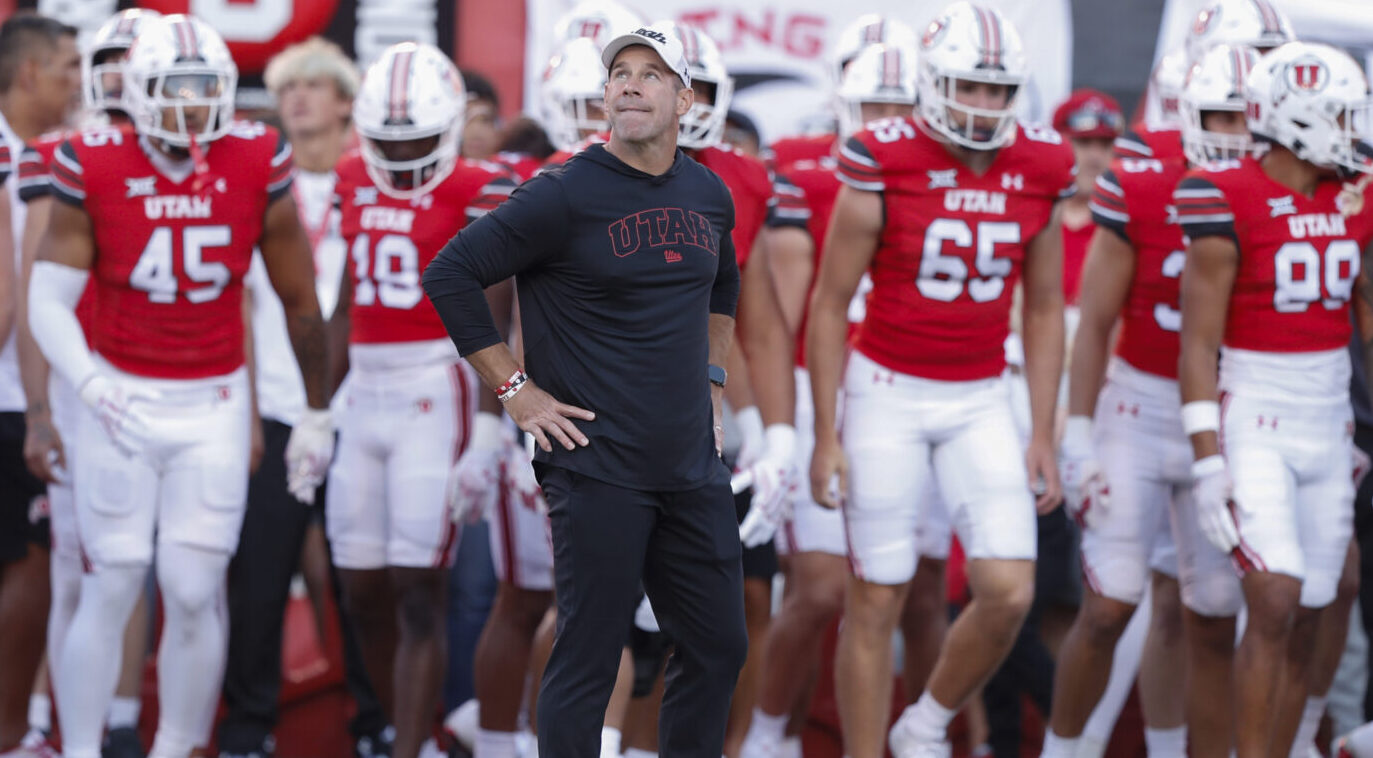
SALT LAKE CITY, UT - AUGUST 29: Morgan Scalley defensive coordinator of the Utah Utes watches warmups before their game against the Southern Utah Thunderbirds at Rice Eccles Stadium on August 29, 2024 in Salt Lake City, Utah.(Photo by Chris Gardner/Getty Images)
(Photo by Chris Gardner/Getty Images)

SALT LAKE CITY — Utah football will enter Morgan Scalley’s first full season with six captains representing the program’s most important positions and several of its most trusted voices.
Quarterback Devon Dampier, running back Wayshawn Parker, offensive lineman Alex Harrison, linebackers Johnathan Hall and Trey Reynolds, and safety Nate Ritchie were selected by their teammates as Utah’s captains for the 2026 season, the program announced Tuesday.
𝑶𝒖𝒓 𝒄𝒂𝒑𝒕𝒂𝒊𝒏𝒔 heading into the 2026 season🫡#GoUtes | #RSNB pic.twitter.com/UJ01YxkdJF
— Utah Football (@Utah_Football) August 25, 2026
All six captains are also included on Utah’s 15-player leadership council, which was likewise determined by a team vote.
The complete council includes Dampier, Parker, Harrison, Hall, Reynolds, Ritchie, quarterback Byrd Ficklin, receivers Braden Pegan and Tobias Merriweather, offensive lineman Zereoue Williams, defensive ends Lance Holtzclaw and Ethan Day, defensive tackle Karson Kaufusi, defensive backs Rabbit Evans and Jackson Bennee, and long snapper Logan Castor.
The selections provide a clear window into how leadership will be distributed during Scalley’s first season—and which players their teammates trust to establish the program’s daily standard.
Dampier becomes the clear offensive leader
Dampier’s selection is the least surprising of the six.
The senior quarterback accounted for 3,325 total yards and 34 touchdowns while helping Utah win 11 games in 2025. His value, however, extends beyond production.
Dampier has become increasingly vocal as his command of Kevin McGiven’s offense has grown. McGiven identified Dampier as Utah’s starting quarterback and the leader of the offense while describing the relationship between Dampier and Ficklin.
“You have Dev, who has quite a bit more experience, and in some ways that shows up,” McGiven said. “I think that’s why he’s the leader of our offense and our starting quarterback.”
Dampier’s teammates have delivered similar evaluations. Hall previously described him as an uplifting leader who does not tear others down when corrections are needed.
Dampier’s playmaking will remain central to Utah’s championship hopes. His captaincy reflects the larger responsibility accompanying it: He is the primary bridge between last season’s success and Scalley’s first full season.
Voted on by their peers, these are the men 𝒍𝒆𝒂𝒅𝒊𝒏𝒈 𝒖𝒔 this season🤝#GoUtes | #RSNB pic.twitter.com/9SqZ28B9kB
— Utah Football (@Utah_Football) August 25, 2026
Parker’s role continues to expand
Parker’s selection represents another step in his progression from talented transfer to foundational offensive player.
After initially sharing Utah’s backfield workload, Parker separated himself late last season and became the offense’s primary runner. He now enters 2026 as one of the Big 12’s most important returning backs.
McGiven made it clear during fall camp that Parker must be given opportunities to influence games.
“We have Wayshawn back there, and Wayshawn needs to take on his share of the load,” McGiven said. “He needs to be able to showcase that and have those opportunities.”
Being elected captain indicates Parker’s growth has not been limited to carries, rushing yards or explosive plays. His teammates now view him as one of the players responsible for setting Utah’s standard.
Parker is no longer merely being asked to make plays. He is being asked to help lead the offense making them.
Harrison’s selection carries additional meaning
Harrison may be the most revealing selection among Utah’s captains.
Unlike Dampier and Parker, he does not enter the season with an established résumé as one of the Big 12’s most productive players. He is part of an offensive line replacing every starter from last season and still establishing its best five-man combination.
Yet his teammates selected him as a captain. That vote speaks to how Harrison handled the development process and the influence he carries within Utah’s locker room.
Offensive line coach Jordan Gross recently identified Harrison, Williams and Keith Olson as players who remained patient while waiting for larger opportunities.
“They’ve put in their time here waiting for an opportunity, and they’re definitely going to receive that opportunity,” Gross said.
Harrison’s captaincy does not resolve every question about Utah’s offensive line. It does reveal which lineman his teammates trust to help guide the transition.
The Utes lost two first-round NFL draft picks in Spencer Fano and Caleb Lomu, along with several other experienced contributors. Harrison will be responsible for helping the new group establish its own identity.
Hall and Reynolds will lead Utah’s linebackers
Selecting two linebackers among the six captains reinforces the importance of Hall and Reynolds to Utah’s defense.
Hall possesses the most playing experience in the room and has expanded his skill set during the final weeks before the season. Reynolds has earned a reputation for consistency and reliability throughout the spring and fall.
“John, who probably out of the group has the most playing experience, has done a really good job building upon his repertoire of skill sets,” defensive coordinator Jason Swan said. “Trey Reynolds has always been a really steady backer that is very consistent.”
Utah has intriguing young talent behind them in Elijah Elliss and Cyrus Polu, but Hall and Reynolds are the stabilizing pieces. They must align the defense, communicate adjustments and connect a rebuilt defensive front with a versatile secondary.
Their joint selection also illustrates that leadership does not need to be monopolized by one voice. Hall brings experience and an expanding skill set. Reynolds provides steadiness and trust.
Ritchie provides continuity on the back end
Ritchie has developed into one of Utah’s most trusted defenders and respected locker-room figures.
His selection provides continuity within a secondary replacing prominent contributors but retaining significant positional flexibility. Ritchie understands the defensive standard Scalley established as coordinator and will now help carry its program-wide expansion.
Scalley has elevated RSNB from a defensive identity into the culture of the entire team. Safeties coach Derrick Odum described the transition as familiar in its foundation but different in its presentation.
“The culture is now RSNB, and we all love it,” Odum said. “The kids understand it. They understand what it means daily to have this culture, and it’s a throughout-the-team type of culture.”
Ritchie is positioned to help translate that message. His experience and understanding of the defense give Utah an established voice in the secondary, complementing Hall and Reynolds in the middle.
Utah distributes leadership throughout the roster
The broader leadership council includes six offensive players, eight defenders and one specialist.
Dampier and Ficklin represent the quarterback room. Parker gives Utah a voice at running back, Pegan represents the receivers, and Harrison and Williams provide leadership along the offensive line.
The defensive council reaches every level. Holtzclaw and Day represent the edges, Kaufusi the interior, Hall and Reynolds the linebackers, and Ritchie, Evans and Bennee the secondary. Castor provides special-teams representation.
Several council members received notable praise from their position coaches during fall camp.
Wide receivers coach Chad Bumphis called Pegan “a true leader in every sense of the word,” noting that his rising level of play helped elevate the rest of the receiver room.
Bumphis also shared that Merriweather finished camp on a high note.“I think Saturday in the stadium was probably one of his better days of camp,” he said. “He’s been really good—especially off the field, he’s been unbelievable.”
Defensive ends coach Inoke Breckterfield praised Day’s mentality after his transition from the Group of Five level.
“He’s wired the right way,” Breckterfield said. “When you watch practice and you watch him, you can’t tell that he just came from a Group of Five. He fits right in.”
Breckterfield’s expectations for Holtzclaw also captured the standard Utah wants its leaders to reinforce.
“You don’t have to do anything extraordinary,” Breckterfield said. “Just do the ordinary stuff better than anybody else.”
Leadership in Scalley’s first full season
Scalley inherited a program with an established culture, but becoming head coach required him to make that culture his own.
The six captains and 15-player council will be central to that process.
Utah’s leadership structure remains player-driven. The selections were made by teammates rather than assigned solely through coaching preference, giving the group credibility inside the locker room.
The titles will matter only if the behavior reinforces them—particularly after losses, during difficult practices or when a teammate’s effort slips.
But the vote establishes where Utah’s locker room has placed its trust.
Dampier and Parker will carry the offense. Harrison will help stabilize a rebuilt line. Hall and Reynolds will direct the heart of the defense. Ritchie will connect the secondary to Scalley’s standard.
Scalley may be leading Utah into a new era, but the program will rely upon those six players—and the larger council surrounding them—to bring that vision to life every day.