Five takeaways from Morgan Scalley’s Colorado week press conference
Oct 12, 2026, 1:57 PM

SALT LAKE CITY — With an unblemished record through five games, Morgan Scalley took the podium for his Colorado week press conference.
The Utes have excelled in many ways, as well as some opportunities for improvement. Yet, Scalley sees plenty worth defending with his ball club, which includes a defensive approach that forced Kansas away from its strength.
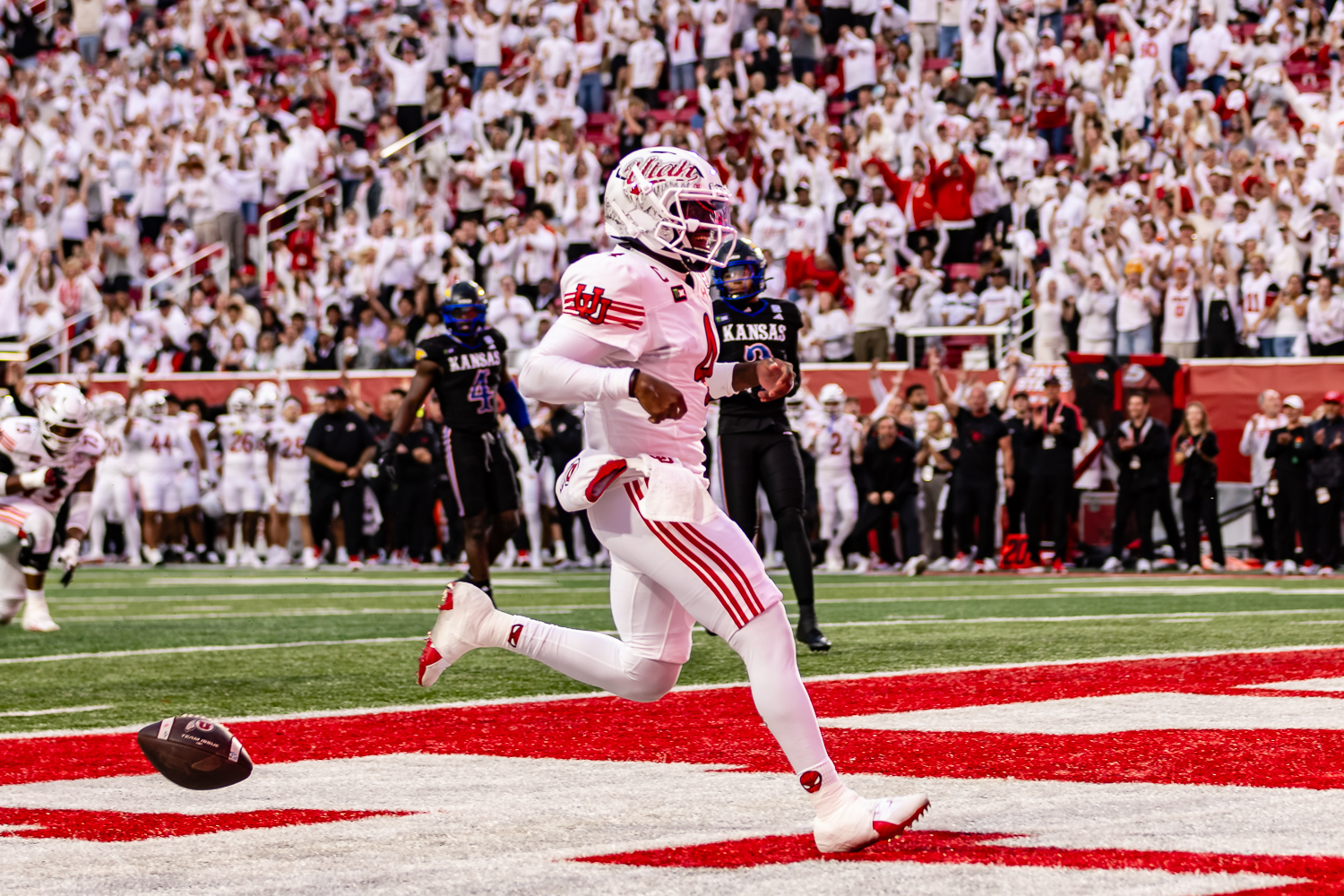
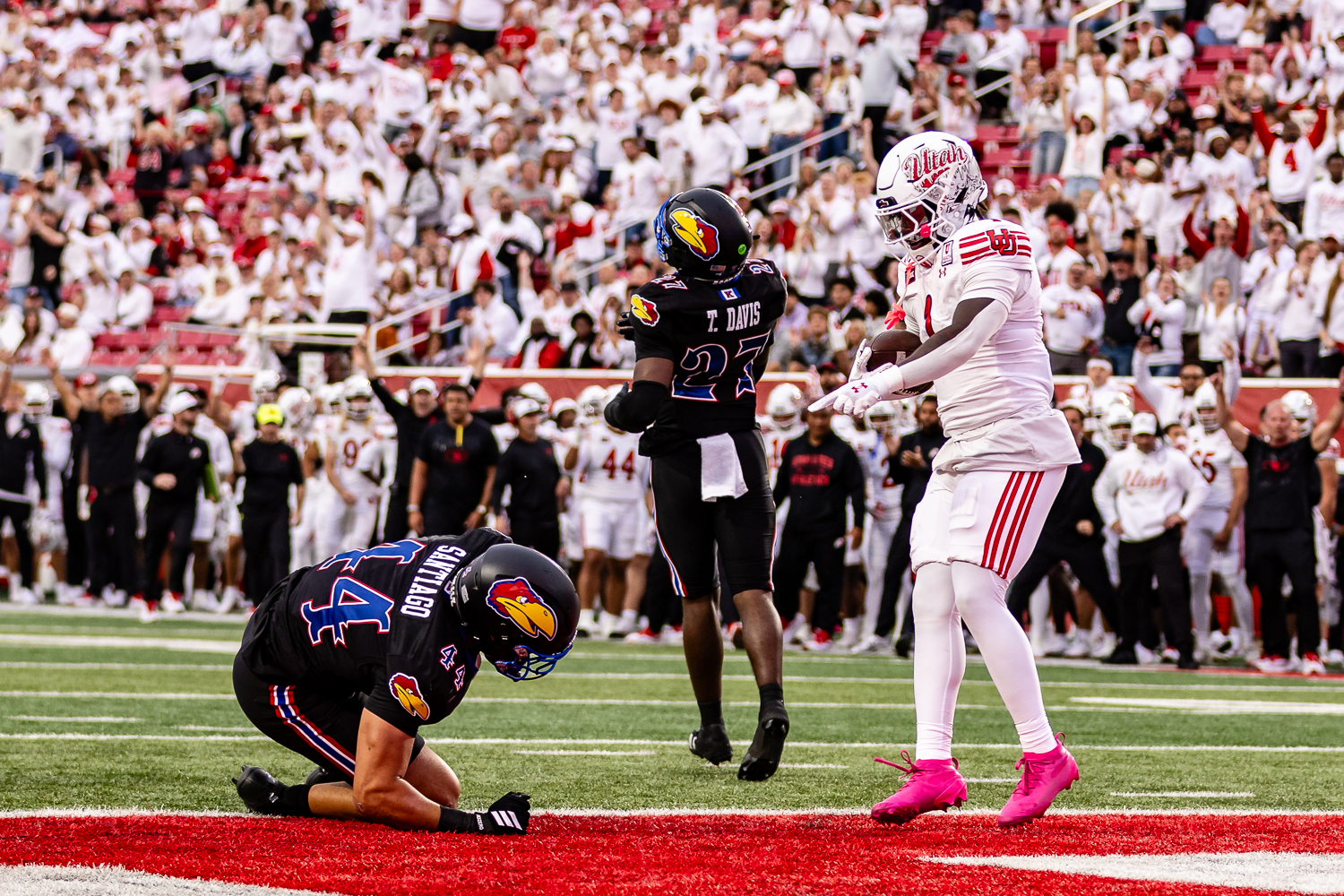
Following Utah’s 41-24 victory, Scalley’s press conference offered a closer look at how he evaluates the defense, manages Wayshawn Parker’s workload and views an offensive line that has helped drive the early success.
He also made clear how personally he takes the pursuit of the state’s best recruits.
Here are five takeaways as Utah turns its attention to Colorado.
Our ears are still ringing 🔊
#GoUtes | #RSNB | @Xfinity https://t.co/94jgG0cFzl
— Utah Football (@Utah_Football) October 12, 2026
Morgan Scalley stands by the defensive plan but wants fewer costly completions
Scalley’s assessment of the Kansas game came with an important distinction: forcing the Jayhawks to throw was the objective. Allowing explosive completions was the problem.
Kansas entered with the Big 12’s top rushing attack, averaging more than 250 yards per game. Utah held the Jayhawks to 58, a significant defensive win. Scalley also was pleased with Isaiah Marshall’s roughly 51% completion rate, but the damage on those completions was unacceptable.
He described allowing more than 17 yards per completion as “not even close to good enough,” citing issues with responding to tempo, getting aligned and communicating in the secondary.
The run defense accomplished its assignment, but forcing passing situations only helps so much if the next completion erases the advantage. Utah’s red-zone execution helped offset those breakdowns: Kansas scored touchdowns on two of five trips, while the Utes went five-for-five.
Scalley was less concerned about the defensive ends’ sack production.
“I don’t care where the sacks come from,” Scalley said.
His point was that the pass rush cannot be evaluated independently of the entire defense, particularly its success against the run.
“In 2014, we led the nation in sacks, we had 55,” he said, while noting that sacks count against rushing totals. “And you know what we were in the country in rush defense that year, with 55 sacks? We were 41st in the country. You know where we are in the country right now in rush defense? We’re top 10.”
Scalley still wants pressure, but opponents’ protection schemes influence where Utah can generate it.
“And yes, I want sacks, I think everyone wants sacks, you want those disruptive plays,” Scalley said. “At the same time, if I’m getting max protection every single down and they’re trying to protect because they know we have good defensive ends, then okay, you just got to find ways to get sacks other places.”
The sack column, in his view, is only part of the defensive report card.
“I’m not concerned one bit about the sacks.”
Wayshawn Parker’s workload is a weekly decision with season-long consequences
When Parker is running as effectively as he did against Kansas, the natural question is why Utah does not keep handing him the football.
Scalley’s answer comes down to keeping the offense unpredictable and Parker healthy.
“I think if it’s Wayshawn, Wayshawn, Wayshawn, it’s easy for people to load the box,” he shared. “The other thing are the hits that running backs take over and over and over again. It is a car crash, every tackle for the most part.”
Utah is balancing what Parker can provide each Saturday against the punishment that accumulates across a season. Scalley said Parker wants the football but understands that approach, adding that his contributions beyond carrying the ball have attracted NFL scouts’ attention.
More carries will remain tempting when Parker is producing. Utah also wants him healthy enough to keep doing it.
“And so just making sure player load-wise you’re doing everything you can to keep him healthy,” Scalley said. “And yes, does he want the ball? You bet. Any competitor does. But it’s also what’s best for the team. And he understands that too.”
The drive that sealed the deal 🙌 @WayshawnParker 90-yard house call is the @FellerandWendt Drive of the Game‼️
#GoUtes | #RSNB https://t.co/EE3x0W8E0p
— Utah Football (@Utah_Football) October 12, 2026
Keeping Utah talent home is personal for Scalley
Asked what “We Are Utah” means in recruiting, Scalley made clear that local prospects still have to meet the program’s standard.
“You’re not just going to recruit and offer kids in the state just because they’re in-state kids. They have to be able to play at this level. The great thing is, is that they can,” Scalley said. “More and more teams, I mean every SEC team, Big Ten, you name it, they’re coming into Utah, and particularly for your offensive and defensive linemen.”
Since his introduction as head coach, Scalley has expressed confidence that Utah can win at the highest level with homegrown talent. The 2027 class reflects that emphasis, with nine of its 21 commitments coming from seven Utah high schools.
That pursuit extends into the loaded 2028 and 2029 classes. Orem linemen Maui Tonata, Major Stokes and Mataio Fano, West offensive lineman Samiu Taukiuvea, Herriman’s Toa Feinga and Timpview teammates Dennis Tua’one and Malosi Ilaoa are among the local targets.
Utah is making headway despite substantial national competition. For Scalley, those recruiting battles carry a personal investment.
“Every time I see a Utah guy out of state, you know, excelling in a different program, it’s like, man, it eats at me,” Scalley said.
That gives “We Are Utah” a recruiting purpose: convincing more of the state’s best players they can pursue their ambitions without leaving home.
The offensive line is delivering
With transfers arriving and returning players still developing, Scalley entered the season with questions about Utah’s offensive line. Through five games, the group has provided encouraging answers.
He cited Utah’s 7.19 yards per play, ninth nationally and first in the Big 12, and 243 rushing yards per game, eighth nationally and second in the conference.
“It doesn’t happen without a great offensive line,” Scalley said.
After putting up 5️⃣4️⃣5️⃣ total yards (287 rushing) on offense, 𝐎𝐁𝐋𝐎𝐂𝐊 is the @Big12Conference 𝐁𝐄𝐄𝐅 𝐎𝐅 𝐓𝐇𝐄 𝐖𝐄𝐄𝐊 😤
#GoUtes | #RSNB https://t.co/bNEqwArHwg
— Utah Football (@Utah_Football) October 12, 2026
He credited Jordan Gross and the staff for the development, highlighting Zereoue Williams’ “really elite football” and the group’s growing cohesion. Its performance against an active Kansas front offered another positive sign, giving Utah the foundation to use its playmakers and varied quarterback packages effectively.
The line could also regain depth. Isaiah Garcia is back practicing after being listed out the previous two weeks, though Scalley did not announce his game availability.
The two-quarterback package starts with willingness
What makes Utah’s arrangement unusual, Scalley said, is a backup quarterback willing to do more than play quarterback.
Byrd Ficklin’s versatility allows him to share the field with Devon Dampier. Both can run, catch and throw, giving Kevin McGiven multiple ways to challenge a defense.
Scalley would welcome continuing that approach.
“As a defensive coordinator, I know the issues that it presents,” he said.
But it requires the right personnel and good health. Scalley said McGiven has a plan for when the package is unavailable.
That willingness to share responsibilities fits an offense spreading its opportunities. Scalley praised Dampier’s progression through reads and noted that eight Utes have at least five receptions.