Instant Takeaways: Wayshawn Parker powers Utah past Kansas, 41-24
Oct 10, 2026, 9:56 PM | Updated: 9:57 pm
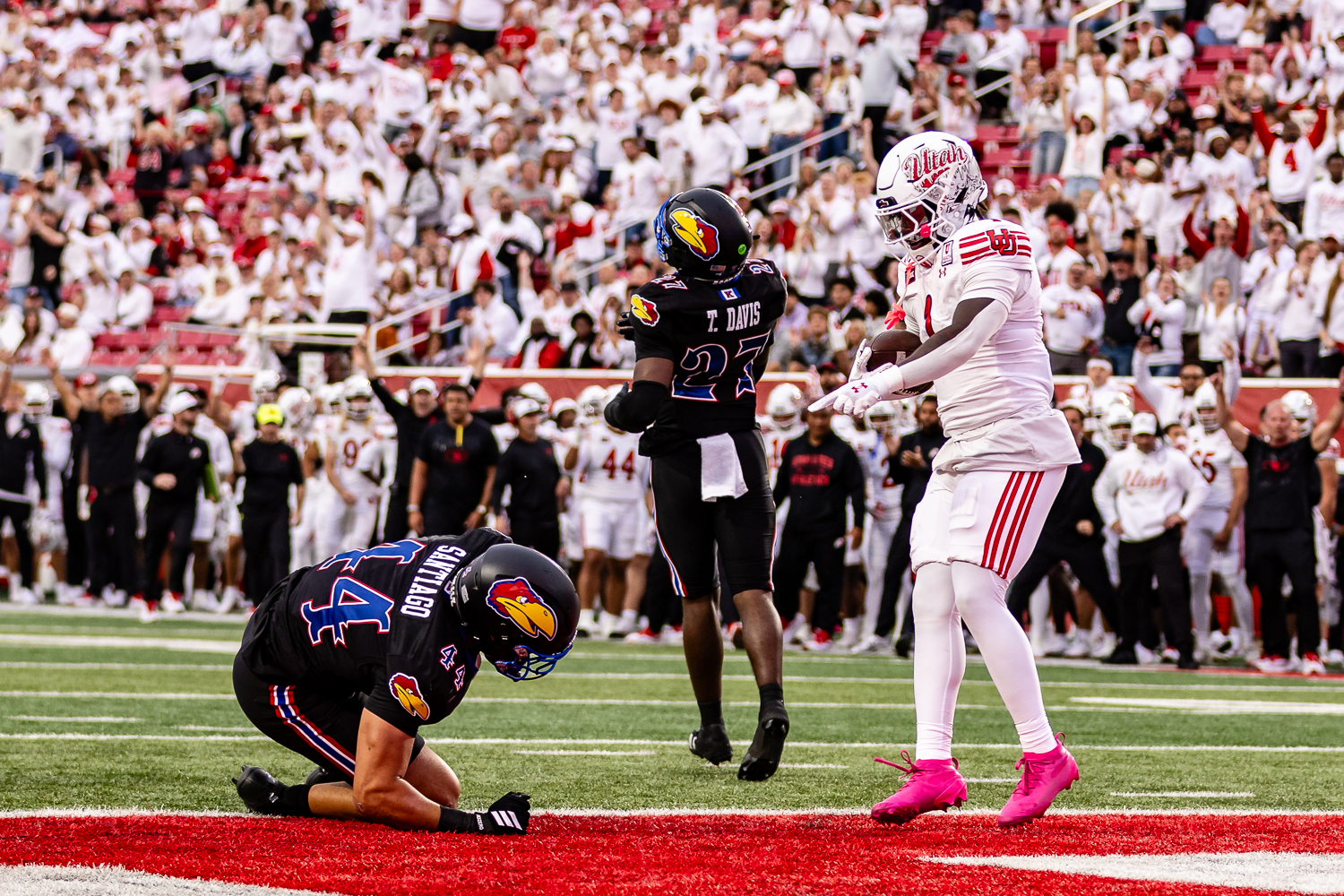
Kansas Jayhawks vs. Utah Utes at the Rice Eccles Stadium in Salt Lake City, Utah on Saturday, Oct 10, 2026. (Photo: Joel A. Davidson / UteZone, On3)
(Photo: Joel A. Davidson / UteZone, On3)

SALT LAKE CITY — Wayshawn Parker gave Utah the separation it had spent much of the night struggling to create.
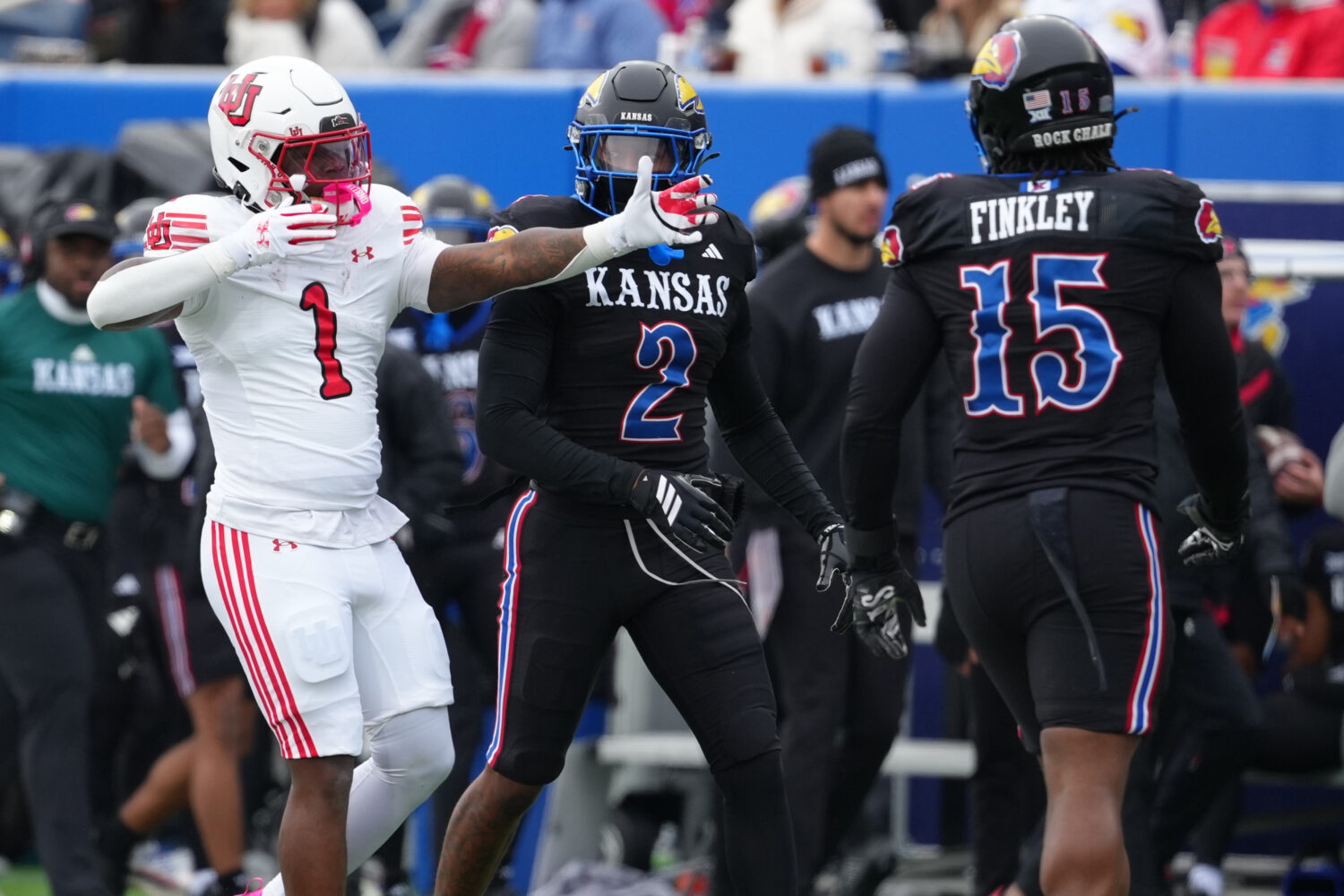
With Kansas threatening to turn a comfortable start into a tense finish, Parker took a direct snap on third-and-1 and raced 90 yards for a touchdown. The run pushed the Utes’ lead to 41–24 with 7:13 remaining and punctuated a performance that made him Utah’s offensive headliner.
Devon Dampier recovered from a troubling first half, but Utah’s pass defense repeatedly surrendered explosive completions to Isaiah Marshall. A goal-line stand and Parker’s breakaway finally gave the Utes room to breathe.
UTAH WINS‼️
Utah: 41
Kansas: 24#GoUtes | #RSNB | @UofUHealth https://t.co/kkv7SwNQfF
— Utah Football (@Utah_Football) October 11, 2026
Wayshawn Parker was the star of the show
Parker had 171 yards and two touchdowns on 16 carries, averaging 10.7 yards per attempt, plus two receptions for 36 yards.
His biggest contribution arrived when Utah most needed it. After the defense stopped Kansas at the 1-yard line, the Utes gained nine yards on their first two snaps. Parker then took a direct snap on third-and-1 from the Utah 10 and turned a short-yardage situation into a 90-yard touchdown.
When Utah needed a conversion, Parker delivered the biggest play of the season.
He had already scored Utah’s opening touchdown on a 5-yard run and supplied a 23-yard gain on its first touchdown drive after halftime. His work continued after the breakaway, too.
On Utah’s next possession, Parker gained nine yards on the ground and turned a third-and-1 pass into a 22-yard gain, helping the Utes maintain possession and drain the clock.
His 207 yards from scrimmage accounted for 38% of Utah’s 544 total yards.
Devon Dampier’s recovery matters, but so do the mistakes that preceded it
Dampier’s passing line was an efficient 23-of-30 for 238 yards, three touchdowns and one interception, along with 68 rushing yards and a touchdown. Those totals obscure how uneven the performance had been.
| Quarter | Passing | Yards | TD–INT |
|---|---|---|---|
| First | 4–5 | 60 | 0–0 |
| Second | 7–10 | 46 | 1–1 |
| Third | 4–6 | 32 | 1–0 |
| Fourth | 8–9 | 100 | 1–0 |
Dampier helped establish the early lead with a 44-yard completion to Ricky Johnson and a 12-yard scoring run. But he also lost a fumble on a late first-quarter sack, giving Kansas the short field for its first touchdown.
His second-quarter decision-making was more concerning. He looked hesitant, disrupted one possession with an illegal forward pass, took a fourth-down sack on another, and then forced a deep throw toward Braden Pegan that was intercepted with less than a minute remaining.
The second half brought a needed reset. Dampier helped sustain a 15-play touchdown drive, then connected with Johnson for 45 yards on the next scoring possession before finding Semi Taulanga on fourth-and-goal.
He completed 12 of 15 passes for 132 yards and two touchdowns after halftime. His late 18-yard run on second-and-17 also helped Utah keep possession. That response deserves credit without dismissing the mistakes that helped Kansas get back into the game.
Utah’s bet on containment and coverage did not hold up
Utah’s cage-rush approach reflected a clear priority: keep Marshall in the pocket, limit his escape routes and trust the secondary to handle the passing game.
The containment portion largely worked. Marshall had 21 rushing yards on nine attempts, and Kansas had only 58 rushing yards overall. But the coverage portion definitely did not.
Marshall threw for 333 yards and two touchdowns without taking a sack. Nine completions gained at least 20 yards, accounting for 264 yards — nearly 80% of his passing production.
Utah limited his running, but Marshall repeatedly punished it through the air. Cam Pickett had eight catches for 134 yards, while Nik McMillan added four for 89 and a touchdown.
The failures included a 29-yard touchdown on third-and-11 and consecutive completions of 41 and 30 yards immediately after Utah built a 34–24 lead. The defensive approach depended on Utah holding up behind the rush.
This has to be something that Utah evaluates more thoroughly. Allowing a volatile passer like Marshall to dice up the defense like tonight is quite concerning.
The goal-line stand changed the fourth quarter
After those consecutive explosive completions, Kansas reached the Utah 1 with an opportunity to cut the lead to three.
A false start pushed the Jayhawks backward, and a completion to Carson Bruhn was overturned on review from a touchdown to a gain that ended at the 1. On fourth down, Rabbit Evans and Johnathan Hall stopped Marshall for no gain.
That stand preserved the 34–24 advantage. Three Utah plays later, Parker was in the opposite end zone.
The defense followed with another fourth-down stop on Kansas’ next possession, which ended with a dropped pass by McMillan at the Utah 7.
Those stops were essential. They also did not erase the coverage problems: Kansas drove 74 and 68 yards on those possessions before coming away empty.
Utah’s second-half offense supplied the response its defense needed
The Utes scored touchdowns on each of their first three possessions after halftime, with drives covering 82, 75 and 99 yards.
The first required 15 plays and 7:24. The second featured Dampier’s 45-yard connection with Johnson and a fourth-down touchdown pass. The third lasted just three snaps because Parker supplied the 90-yard finish.
Johnson was an important part of that response, catching five passes for 104 yards and a touchdown. His two longest receptions gained 44 and 45 yards, giving Utah a downfield answer of its own.
Utah then kept the ball from the 5:25 mark to the two-minute timeout. Parker’s 22-yard reception moved the chains, Dampier escaped second-and-17 with an 18-yard run, and Daniel Bray added another first down on the ground.
After its final three first-half possessions ended in a punt, turnover on downs and interception, Utah found multiple ways to finish drives and control the clock. Dampier settled down, Johnson delivered big catches, and Parker provided the play that finally created meaningful separation.